
People born with variations in sex characteristics continue to face stigma, discrimination, barriers to healthcare and difficulties accessing official documents.
At the first African Intersex Conference in Nairobi, leaders and advocates called for stronger legal protection, inclusive services and greater participation of those affected in decisions shaping their lives.

Building a continental movement
Obioma Chukwuike, Chairman of the Board of the African Intersex Movement from Nigeria, described the conference as a historic moment for the community across Africa.
“Today is historic. For the first time, we gather for a conference of our own not at the margins of somebody else’s agenda, not as a footnote in someone else’s movement, and not merely as subjects of discussion. We gather as a movement: African intersex people organized, determined and ready to shape our own future,” he said.
Chukwuike said many had spent years believing they were alone before finding communities where they could share their experiences.
“But look around you today. You are not alone. Across Africa, we have found one another, and finding one another has made us more powerful. We have built a movement,” he said.
He recognised pioneers who advocated for the rights of the community when it remained largely invisible, including South Africa’s Sally Gross, whose work contributed to placing the issue in African human rights history.
He also remembered those whose names were never recorded and those who lost their lives to violence, harmful practices, isolation and neglect. Participants observed a minute of silence in their honour.
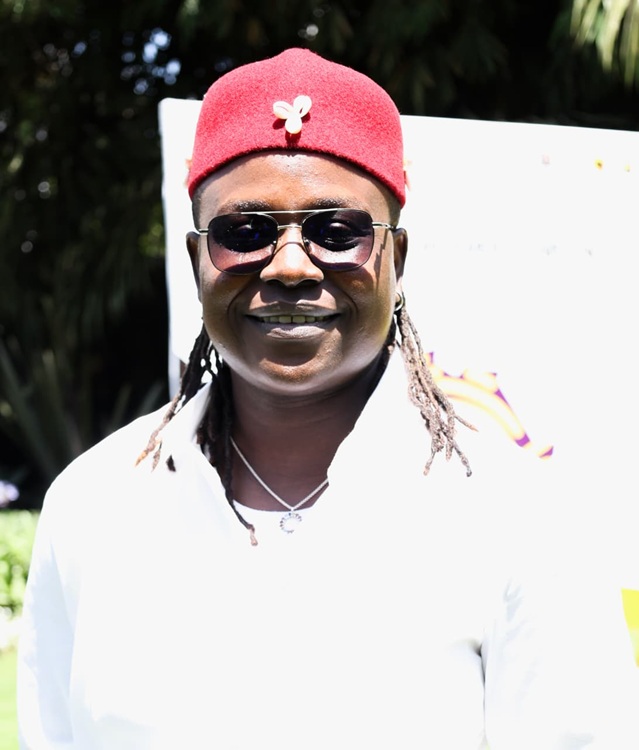
Chukwuike said the conference theme, Building a Community, Rising in Power, Reclaiming Bodily Autonomy and Building a Future in Africa, represented a commitment to ensuring the community shapes its own future.
“We are rising because silence is no longer acceptable. The next generation of intersex Africans deserve more than survival. They deserve joy, families that celebrate them, quality healthcare that protects them, laws that recognize them, safe schools and communities where they belong,” he said.
He challenged governments, healthcare professionals, researchers, UN agencies and donors to turn awareness into practical action.
“Awareness without action will not protect the child. Research without community will not create justice. Policy without information and documentation will not change lives. And partnership without intersex leadership is not inclusion,” Chukwuike said.
Growing the network
Julius Kaggwa, founder of Support Initiative for People with Atypical Sex Development (SIPD), focused on the growth and sustainability of Africa’s movement.
Kaggwa acknowledged the partners and donors whose support has contributed to its growth.
He said the network now has more than 40 members across over 20 countries in Eastern, Southern and Western Africa.
“We may be the youngest intersex network in the world, but we are also among the largest,” he said.
He said social and cultural pressures, isolation and trauma can contribute to poverty and destitution, making stronger community networks and investment in well-being necessary.
Kaggwa urged participants to address shrinking funding, anti-gender narratives and the exclusion of African voices from global decision-making spaces.
He also called for greater attention to health justice, inclusive health systems and bodily autonomy.
“Let us talk about how we advance bodily autonomy and recommit ourselves to the intersex children of Africa. These conversations are not easy, but they are necessary because they are the seeds of our transformation,” he said.
Kenya’s rights journey
Dr Dennis Wamalwa, the first intersex commissioner at the Kenya National Commission on Human Rights (KNCHR), highlighted the country’s progress in recognition and protection.
Wamalwa spoke about undergoing several surgeries and starting testosterone therapy at the age of nine, experiences that shaped his advocacy for appropriate healthcare.
“I have been on testosterone since I was nine years old. It’s very expensive, and most of my colleagues cannot afford that,” he said.
He cited cases that contributed to reforms, including that of a person detained at Kamiti Prison after being placed in a male facility. Another involved a child whose birth notification carried a question mark instead of a sex designation, preventing access to a birth certificate and essential services.
The cases contributed to the establishment of the Intersex Persons Implementation Coordination Committee, which examined challenges facing the community and made recommendations to the government.
The country subsequently became the first to enumerate intersex people in a national census. The 2019 census recorded 1,621, although Wamalwa said the figure did not represent the actual population.
He said children are recognised under the 2022 Children Act and an intersex sex marker has been introduced on official documentation.
The KNCHR is working with police, prison authorities and schools to improve understanding, while supporting the inclusion of related issues in the school curriculum.
Wamalwa also called for greater support for healthcare needs and said the proposed Intersex Bill 2024 could further strengthen legal protection.
“We dream and look forward to seeing a Kenya where an intersex person will walk in and you will not look at them as if they are aliens,” he said.
Push for a Nairobi Declaration
Head of the Office of Diversity, Inclusion and Disability Rights in the Executive Office of the President Isaac Mwaura called for the adoption of a Nairobi Declaration that would provide a common framework for protection and inclusion.
His proposals included an intersex marker in birth registration documents, an end to the killing of infants born with variations in sex characteristics and protection from non-consensual or medically unnecessary surgeries on children.
Mwaura also proposed that national censuses include questions on intersex people to generate reliable data for policies and services.
He called for equal access to healthcare, including psychosocial support, as well as education and employment opportunities. He said those affected should participate in developing policies that affect them.
“Intersex persons are individuals who should be celebrated and not seen as medical experiments. These are lived experiences. These are people who have dignity and rights,” he said.
Mwaura noted that the Children Act 2022 has strengthened protections for children, while many African countries still lack comprehensive legal frameworks.
He further proposed a United Nations convention on the rights of intersex persons to establish common standards for their protection globally.
“We are not asking Africa to become something it has not been. We are asking Africa to remember what it was before, because intersex people still existed,” he said.
Mwaura urged participants to use the conference to develop a common agenda and advance the rights and dignity of the community.
“Do not allow yourself to be silenced. Speak up, stand up, get up, shout out, claim your rights,” he said.
Story by Victoria Musimbi