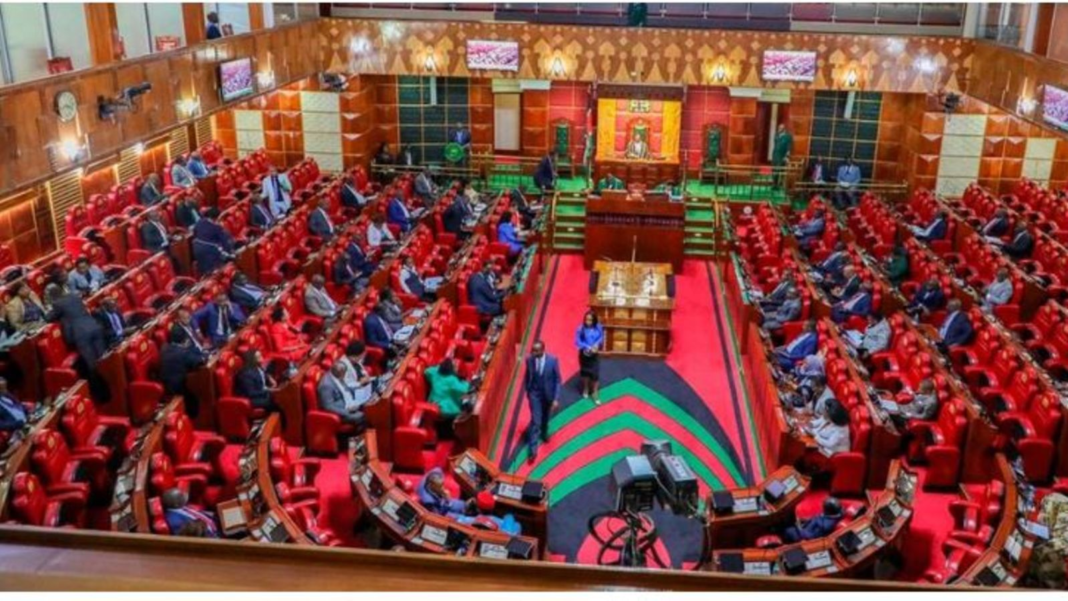
Kenya has a bicameral Parliament consisting of the Senate and the National Assembly, both with the key roles of legislation, oversight, and representation of the people.
Broken down further, these functions can be said to be:
MPs act as the voice of their constituents in Parliament, bringing local concerns, challenges and aspirations to the national level.
They draft, debate, review and pass new laws or amend existing ones that govern the country.
MPs hold the executive branch (the government) accountable by auditing public spending, questioning ministers and probing the misuse of state resources.
They analyse, debate and approve the national budget and allocate revenue for government operations and public development.
MPs are elected directly by the electorate during a General Election, which is held on the second Tuesday in August every fifth year.
They are elected using a simple majority, where the candidate who gets the highest number of valid votes in a constituency wins the seat.
If an MP or a Senator dies, resigns or is removed from office, the Speaker notifies the IEBC and a by-election is held to elect a new representative.
In Kenya, MPs are elected to a bicameral Parliament consisting of the National Assembly and the Senate.
The National Assembly consists of 349 members — 290 elected to represent the 290 constituencies, 47 Woman Representatives to boost gender top-up, and the rest nominated.
The National Assembly nominates 12 members allocated to political parties based on their proportional strength in the National Assembly.
The nominated MPs represent special interest groups, including the youth, persons living with disabilities and workers.
Parliament also has the Speaker, who is elected by the MPs as an ex-officio member of the House.
The Senate consists of 67 Senators — 47 elected, 16 nominated women to boost gender top-up, and four nominated members to represent the youth, one man and one woman, and two members representing persons living with disabilities.
The Senate, too, has a Speaker elected by the Senators.
According to Article 99 of the Constitution, for one to be cleared to run for an MP seat, a candidate must:
Be a registered voter.
Meet statutory educational (post-secondary), moral and ethical standards.
Be nominated by a political party or run as an independent candidate.
Independent candidates require the backing of at least 1,000 registered voters in their constituency (for National Assembly) or 2,000 in their county (for Senators).
MP nominations in Kenya work through internal political party primaries or direct party selection, followed by official clearance and registration by the Independent Electoral and Boundaries Commission (IEBC).
Internal Party Nominations (Primaries). A candidate must be a registered member of a political party for at least three months before being nominated.
Parties choose their candidates via secret-ballot voting (primaries) by registered party members, universal suffrage or direct consensus/appointment, as provided in the specific party’s internal Political Parties Election and Nomination Rules.
Before a General Election, every political party must submit a prioritised “Party List” of chosen nominees to IEBC.
IEBC clears candidates to get onto the ballot.
If a candidate does not want to join a party and wants to run as an independent candidate, they must be cleared by the ORPP.
Once a candidate has a party certificate or independent clearance, they must formally present their papers to the IEBC Returning Officer during designated nomination days.
During the process, any internal disputes are handled by respective party appeals tribunals before final certificates are issued.
What having a majority of MPs or Senators means
Having a majority of Members of Parliament matters because it allows a political party or coalition to easily pass laws, enables the executive arm of the government to advance its legislative agenda and policy proposals with less resistance, and facilitates the budget approval process.
A stable majority in Parliament—two-thirds of the members considered a super majority—also supports the executive in advancing its legislative agenda and can contribute to government stability.
A majority of MPs also lets a party or coalition control key parliamentary committees, reducing scrutiny or oversight investigations into executive actions.