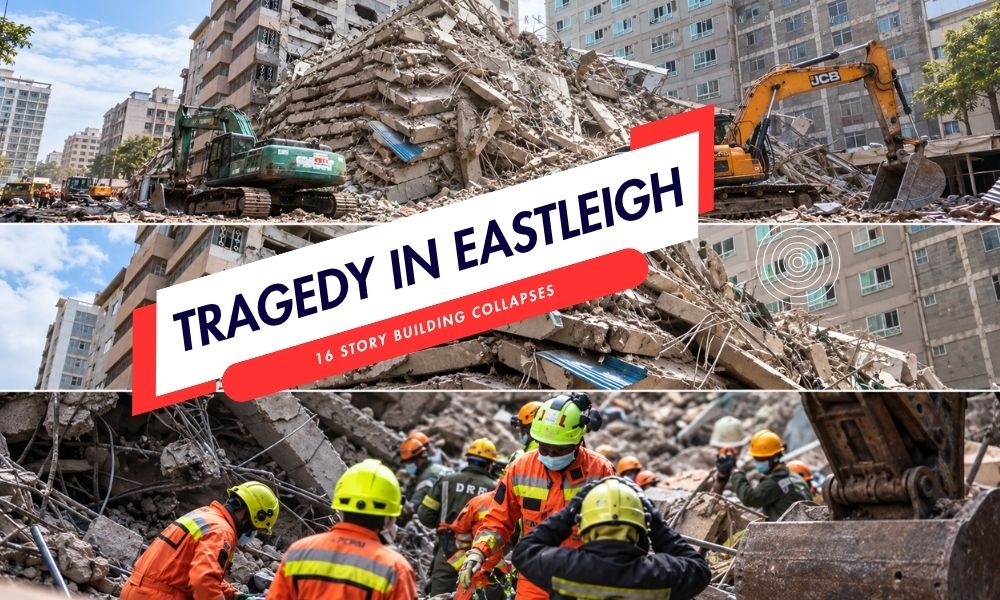
When a concrete high-rise crumbled on Eastleigh’s 9th Street with victims trapped inside, it laid bare a lethal open secret: developers circumvent safety laws, dismiss accredited engineers after acquiring permits, and collect commercial rent long before buildings are certified safe.
Key Takeaways
- Premature Commercial Monetization: The building’s ground and first floors were fully leased to retail businesses without mandatory occupancy certificates, placing shopkeepers in harm’s way while heavy construction was actively ongoing on the upper floors.
- The “Approval-for-Hire” Scheme: Nairobi Governor Johnson Sakaja confirmed that errant developers routinely hire registered structural engineers only long enough to bypass county approval gates, dismissing them immediately thereafter to build without oversight.
- Homicide Inquest Announced: Nairobi Regional Police Commander Issa Mohamud declared that any loss of life will be prosecuted as “negligence by murder”, extending criminal liability to both private developers and any municipal officers who authorized construction.
- Disaster During Peak Commercial Hours: Striking around 1:09 PM just after midday Friday prayers, the collapse immobilized Eastleigh’s business district, forcing law enforcement to secure the perimeter against opportunistic looting.
- Regulatory Disconnect: The incident marks yet another enforcement failure where the National Construction Authority (NCA) and county inspection officers failed to issue timely stop-work injunctions before catastrophe struck.
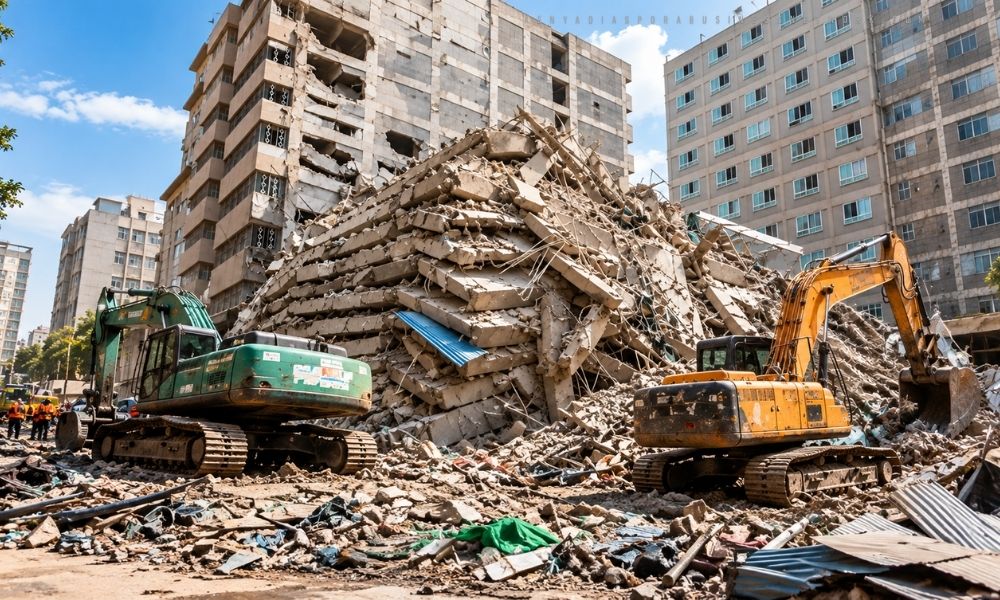
Could this be a warning of things to come?
The sudden collapse of an 18-storey tower on Eastleigh’s 9th Street—as initially recorded in field reports by The Standard—cannot be chalked up as an unforeseeable disaster. It is the direct consequence of structural homicide enabled by regulatory abdication. In high-density commercial centers like Eastleigh, vertical expansion has radically outpaced safety oversight. The catastrophic reality that traders were conducting business on the lower floors while builders were still pouring slabs across upper floors demonstrates a callous disregard for human life and a total collapse of standard occupancy protocol.
— Governor Johnson Sakaja, Nairobi County
For the Kenyan diaspora and institutional investors underwriting real estate across Nairobi, this collapse signals that municipal approvals alone cannot be taken at face value. Safeguarding capital and human life now demands that buyers institutionalize our comprehensive diaspora property due diligence checklist, requiring independent structural audits rather than relying on county paperwork. Until Nairobi enacts an open, digitized construction tracking registry and penalizes unauthorized early occupancy with mandatory prison terms, Eastleigh will not be the last community left digging its citizens out from beneath heaps of preventable debris.
Essential Due Diligence for Diaspora Real Estate Investors
- Verify Resident Engineer of Record: Ensure that accredited structural engineers registered with the Engineers Board of Kenya (EBK) remain contracted for the entire project life cycle.
- Insist on Occupancy Certification: Never authorize tenant occupancy or final hand-over payments without a valid, signed Certificate of Occupation issued by Nairobi City County.
- Engage Independent Site Inspectors: Retain private quantity surveyors and clerk-of-works independent of the developer’s marketing agency. If you suspect structural violations on an active project, contact our investigative desk to request independent verification.