✦ Executive Briefing
Bilateral Diplomacy & Citizen Protection
📌 Key Takeaways
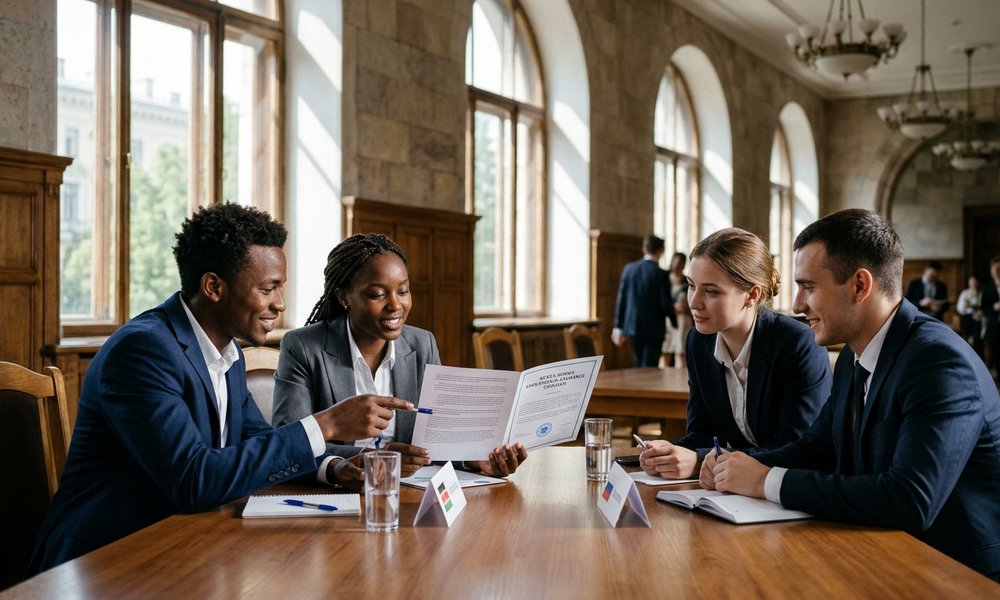
- Non-Source Country Designation: Kenya and Russia reached a formal bilateral accord in Moscow designating Kenya as a non-source country for military recruitment, shutting down illicit channels that enlisted Kenyans into the Russia–Ukraine conflict.
- Repatriation & Compensation Mechanism: A newly appointed Kenyan Defence Attaché in Moscow will liaise directly with Russia’s Ministry of Defence to coordinate the safe repatriation and compensation of affected Kenyan citizens.
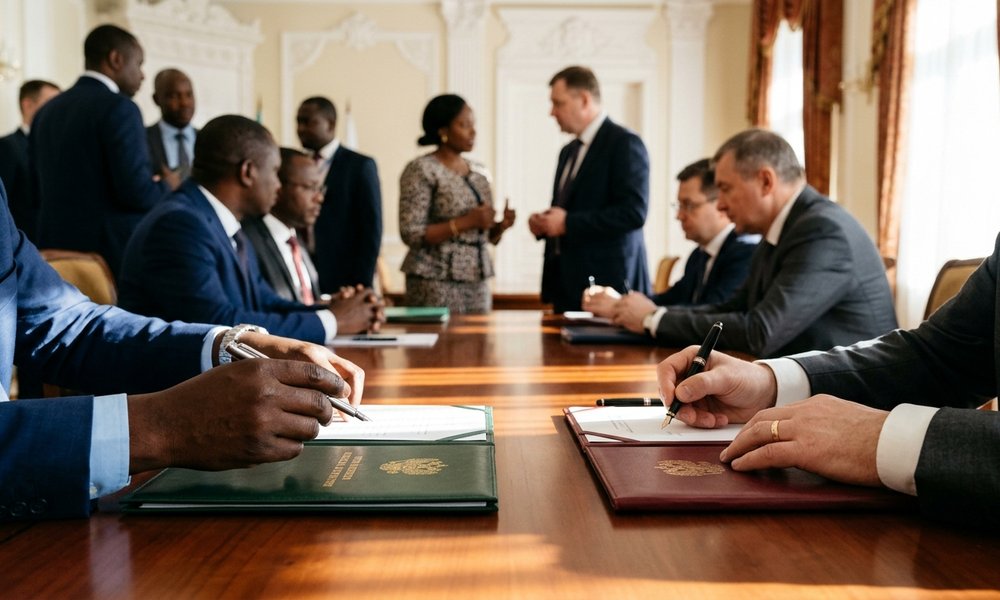
- Five Bilateral Economic MoUs: Both governments signed five Memorandums of Understanding establishing an Intergovernmental Russia–Kenya Economic Commission, regulated labour inspection protocols, transport cooperation, and visa-free diplomatic travel.
- Trade Rebalancing & Scholarships: While safeguarding Russian fertilizer imports, Nairobi pushed to expand Kenyan tea and cut-flower exports to Russia alongside a quadrupling of annual Russian higher-education scholarships for Kenyans from 70 to 300.
Closing Illicit Recruitment Channels & Institutionalizing Labour Safeguards
For months, reports of young Kenyans lured abroad by unregulated recruitment brokers under the guise of civilian security or logistics jobs—only to find themselves deployed to active combat zones in Eastern Europe—sparked intense parliamentary and public alarm. Designating Kenya as a formal non-source country for Russian military enlistment and stationing a dedicated Defence Attaché at the Kenyan Embassy in Moscow establishes an official bilateral mechanism to trace, repatriate, and secure compensation for affected citizens.
Equally consequential for Kenyan Diaspora & Labour Mobility is the new Memorandum of Understanding between Kenya’s Ministry of Labour and Russia’s Federal Service for Labour and Employment. By mandating state-to-state labour inspection and verified civilian employment contracts, the agreement aims to separate legitimate overseas job placements and the expanded 300-seat university scholarship quota from predatory trafficking networks.
Agricultural Trade Rebalancing & Multipolar Diplomacy
On the commercial front, our Business & Economy analysis underscores the urgency of correcting Kenya’s steep bilateral trade deficit with Moscow. While Kenya relies heavily on Russian fertilizer imports to stabilize domestic maize and tea yields, opening direct logistics corridors for Kenyan tea and floriculture into Russian retail markets through the new Intergovernmental Economic Commission is vital for foreign-exchange reciprocity.
Accompanied by Prime Cabinet Secretary Musalia Mudavadi and Trade CS Lee Kinyanjui, Nairobi’s pitch for private-sector participation in Kenya’s National Infrastructure Fund—coupled with Moscow’s backing for the UN Environment Programme (UNEP) headquarters in Nairobi—demonstrates pragmatic diplomatic balancing across Kenya’s Foreign Policy.