Last October, two weeks before Baba died, I was returning to Nairobi after a two-year hiatus. The last time I was home was during the first-year memorial of my sister, Nyangi, who was now the prominent character in my book.
Home had changed in many ways, yet it had not, in a kind of same old but different way. The vibe was familiar, the actors younger, the pace faster. Roads once familiar were now dwarfed by high-rise towers sprouting around the city like wild mushrooms. The expressway from the airport straddling the city dominated the cityscape, a marker of a city in a hurry to grow up.
I used to wonder whether I would change. Would I be like the other diaspora Kenyans I had seen who lost all sense of belonging after just a few miserable winters abroad, and began to look down on their own? Stepping away seemed to have had the opposite effect on me.
This notion of belonging was immediately tested as I faced my former public self. When I announced that I had published a book and would be going on a book tour, the reception was warm. I was reminded of how big Mantalk was, the weekly national column in the Daily Nation that I laboured over for a decade and that has now become part of the country’s cultural landscape, a reference point to a bygone era, for many stuck in nostalgia. I was no longer the Mantalk guy. I had traveled far both within and without. I had grown up, but to many of my readers, I was still that guy, who showed up every Saturday, a mysterious figure who ruffled feathers. The man some female readers used to love to hate.
I had been part of several life journeys unwittingly. And like all fans of urban culture, I was a mascot for those bygone times. Yet here I was, older, perhaps wiser, certainly a lot humbler. I had just poured my soul into a book that detailed my own journey away from the glam and fame of the national spotlight and delved into trying not only to make sense of my unresolved grief but also the grief of a nation. The shift in persona was stark: From a young man who used to critique modern rules of chivalry to one sharing lessons on how to navigate the profound loss that follows the death of a loved one.
To reach these moments of connection, I first had to navigate the city itself. My first stop the night after my arrival was the Prestige Bookshop and Nairobi traffic- well, what has changed? The roads remained clogged, and nothing quite captures Nairobi’s class dynamics as the expressway, raised above, smooth and scenic, with arresting views of flashy high-rise buildings obscuring the reality of chaos that rules just underneath it, bottleneck traffic, matatu madness, and boda bodas that now make matatus appear quite tame. It became a metaphor in hindsight of how we process grief: stoic and contained on the surface, but underneath the facade, a bubbling volcano waiting to erupt.
I remember Prestige bookshop from another time, when the city centre was a little more serene, and Mama Ngina Street still had a taste of the bourgie back when 20th Century Plaza, the Hilton hotel and the International Life House were iconic landmarks in the city centre. Yvonne Adhiambo Owuor was launching her second novel, The DragonFly Sea, in the small bookshop. The shelves had been pushed to the side to create space for the fans, and I was the MC of the day, here to celebrate one of Kenya’s finest novelists. I looked at the bookshop now, wondering how we had pulled it off, for there seemed to be hardly any room to swing a cat.
When the people started to come through, I knew this was going to be special. Odd that despite 28 years of a public writing life, I had never signed an autograph. I remained struck that people would endure Nairobi traffic to meet over a book and demand my bad handwriting on their personal copies.
I didn’t know what to expect as a new world and role began to unfold for me. Lost connections revived. People I had gone to school with, names I hadn’t seen or heard from in years. Friends, family, acquaintances, total strangers, with entwined pasts and reminders of a time once spent in communion; between the firm handshakes and tight embraces, it took me a minute to realise what was happening.
I was being honoured and celebrated. When I went to Ukombozi Library to donate a copy of my book, I met Ogutu, who told me how the story of my father’s funeral process was also his story. At the United Kenya Club, I met Clifford Derrick, who had just buried his mother, and the book triggered his own spontaneous reflections on his moment of loss. At Nuria bookstore on Moi Avenue, I found my old schoolmate Omenge Nyamato, who was still grieving the recent loss of his mother, and he confessed my book would be a guide through grief that he was no longer interested in suppressing. I spoke to a man called Rollex, who pointed out that it was the death anniversary of his father and he wanted a particular chapter signed in dedication to his memory.
The collective sharing continued in Kisumu when I arrivedat the Text Book Centre at the United Mall. I met Sharon who told me that she had just gone through a season of loss, family members who had seemingly died in pairs, as if calling out to each other from the other side and it did not make sense until she found a page in Strength and Sorrow that precisely spoke to her unique grief. The next day in Kisumu I met a smart young man called Akal from Lolwe bookshop who filled a room with eager listeners, joining me in a conversation about death and funerary practices.
What had death taught us, and what was it continuing to teach us?
All the people I met had either recently gone through loss, were trying to make sense of a death from the past, or had come to the realisation of the inevitability of our mortality and were seeking the language to understand it. I realised that I was not just selling a book. I had opened the space for something deeper, through mere presence and perhaps holding a mirror to parts of themselves that they could not see or had forgotten existed.
In the various book stops I made, the meet-and-greets turned into spontaneous grief circles, and I found myself counseling strangers who found resonance in my reflections on loss. Together, we could broach pains that they were afraid to touch for fear of what would erupt.
I was here to hold space for people dealing with complicated and conflicted losses, the unresolved, the forgotten, and to share pathways for people looking back to fetch what had been lost. I was no longer that spirited young man who was grappling with the challenges of modern masculinity. Life had reconstructed me, and now I had returned almost in the mode of a death Douala.
Then, just as I concluded the book tour, this shared human inevitability was amplified on a national stage.
The second chapter of Strength and Sorrow, titled “Baba’s Gone,” is dedicated to my own father.
The first line reads…
When Baba died, I became numb.
He had died of a heart attack….
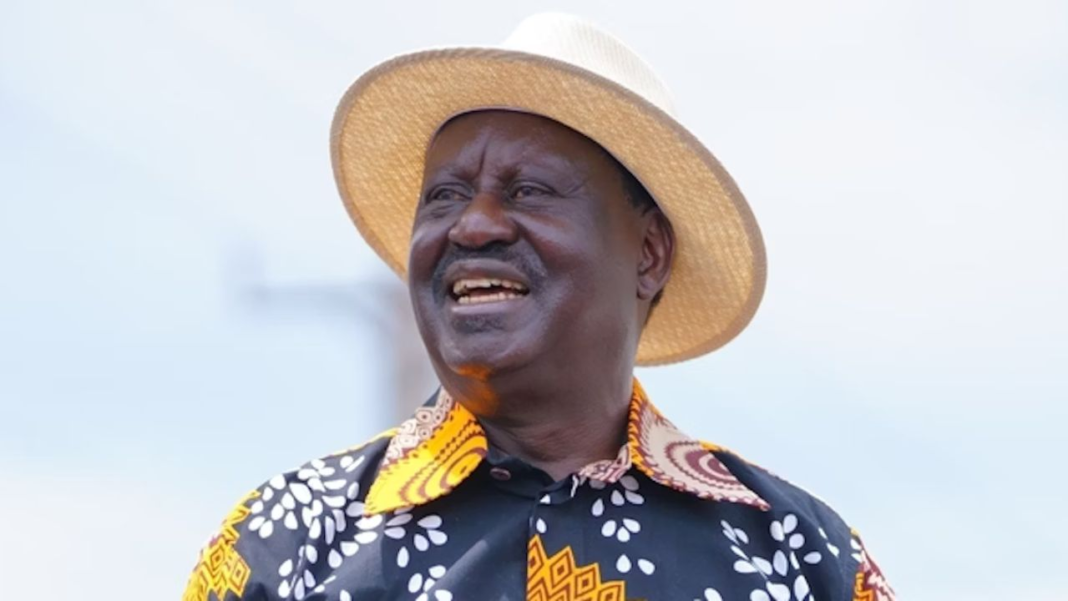
Then, a national father figure, the one, the country fondly called Baba, the former Prime Minister of the Republic of Kenya and perhaps its most consequential leader, Raila Amolo Odinga, had died.
The same sinking feeling returned. I was numb.
As the phone calls started to come through, I recognized the emotion immediately.
It was…Shock!
My cousin described it precisely.
“I don’t know how I am feeling”.
I remember only ten days prior, sitting at the back of a boda, and just as I arrived at the city centre near the University Way, adjacent to the Uhuru Highway, I encountered a most unusual sight. A flight of bats had covered the sky above. I thought about this moment for a long time afterwards.
It seemed ominous. A bat is a creature that flies like a bird, active at night so its flight during the day is an anomaly. I immediately thought there must be some symbolic resonance to this sight. In esoteric traditions, the bat is a symbol of death and rebirth.
When I received the shocking news of the death of the Baba of the nation, Raila Odinga, I thought of those bats again and of the connections to the story of my father.
When Baba died, I became numb.
He died of a heart attack at eighty years of age. He collapsed in a modest clinic in Kerala India, one morning after his routine walk. They said his bodyguard and personal doctor tried to revive him with CPR and that his last-born daughter was there to hold him as he took his last breath. At my age, I had witnessed the passing of many national figures, but I’d never imagined that this one would feel so personal.
Baba had spent five decades as a political engineer, engineering a new vision for a better Kenya. He rose to the apex in his political career as the symbol of democratic reform and even though he was never elected president, he was the beloved people’s president. An elder statesman and a master bridge builder.
He first came to my attention as a political prisoner in the 80s, spending a total of 8 years in harsh detention conditions and surviving it to move out of his father’s shadow and build an illustrious career in political defiance, before becoming the ultimate pragmatist who always pulled the country from the brink with recurring political handshakes. His life was never quiet despite his advanced age and he continued to build, mentor, and raise the political consciousness of the nation.
He was the man everyone thought to call when the nation itself was burning.
Over the years, I had learnt how to see him as a man and not just as a political figure. He embodied the hopes of my generation, and he was the last of our second liberation heroes who remained relevant straight to our adulthood. Baba was a constant of our political reality, and for my parents’ generation who revered him, he stood like a lighthouse.
Baba was a complex character, and I didn’t always understand his political motivations. He broke my heart many times, but I never stopped admiring his ability to stay relevant and his impeccable sense of occasion. Baba embodied all our political disillusionment and hurts, our historical wounds of exclusion, the ethnic prejudice, and the elusive yearning for a just future.
Now, the biggest tree in the homestead had fallen, and the people were discombobulated.
When the news of Baba’s death arrived, I worried about how the country would react. He had died abroad, and the announcement came that Baba had to be buried in 72 hours. I had never felt such a seismic shift in the political atmosphere and my world was spinning, all I could see was darkness.
I knew my tears for Baba would come, and I braced for the tension of the wake. This was no time to be stoic, for our symbol of stoicism had breathed his last.
I watched the hysteria take over as his body arrived from India. Mourners overran the airport; unruly grief was on display, which degenerated into chaotic scenes at Kasarani Stadium, where the body was taken for a public viewing. I watched in dismay at the government’s irrational response of tear gassing and firing shots to contain overwhelmed mourners. It was heavy to bear.
The trigger-happy security forces, the ethnic profiling, the lack of empathy, and the denigration of the ordinary citizen’s grief.
I remember watching the next day as his body lay in state in Parliament, as the country’s political class got a chance to pay their last respects. I watched their faces, caught the performance, the bewilderment, the genuine grief that bared itself. He lay there, draped in an orange sash and black suit, an odd sight for a man remembered for his boundless energy. The ordinary people who truly loved him held nothing back when his remains were wheeled to Nyayo Stadium in Nairobi and later to Mamboleo Grounds in Kisumu. I thought about the millions watching it on livestream around the country and the world. We were all escorting Baba, united in our grief.
The country was steeped in pensive mourning in the days leading to his final interment in Bondo. That spirit combusted the moment the body arrived in Kisumu, where Baba was met with the deafening wailing of multitudes, crying out for a glimpse of Raila, Agwambo, Jakom, Tinga, Wo Nyalego, Wuod Mary.
It was in Kisumu, after the moving sigweya, the funeral dirge by the Luo elder Ajiki Koth Yamo, that my tears for Baba finally arrived, rolling freely down my cheeks. I knew then I wasn’t weeping alone; the elder’s sonorous chant was the nation’s permission to grieve.
I remembered the date of the state funeral was set for Sunday, four days after his death. The burial date would be on the 19th day of October, in Kang’o ka Jaramogi, in his ancestral homeland in Bondo where he would be laid next to his father’s mausoleum.
Funerals are also history classes, sites of memory where forgotten branches of the national family tree are traced. In the shadow of the coffin, the country revisits the archives of its pain and is forced to confront the unfinished lessons of its struggle and reform. Many were given a proper introduction to Baba’s extended national family and political networks that consisted of multiple generations, all claiming an intimate association.
I found it mildly amusing but mostly sad that the political class used the stage to immediately begin carving up the power vacuum, reasserting old rivalries and desperately laying claim as the rightful custodians of Baba’s legacy.
I knew the spectacle would soon be over and that the real mourning would begin after the cameras moved on and the flags went back up. First comes the shock of the loss, followed by the frenzy of the funeral, and once the deceased is buried under concrete, the second wave of grief kicks in after the adrenaline rush and numbness wears off.
Only then can one grasp the magnitude of the loss as the weeks, months, and years unfold. The listlessness and disorientation follow you everywhere, and the triggers erupt. The true grief work, the task we so love to avoid, can only begin then.
I knew this grief so well. It’s the kind that bangs on your door demanding entry, and when you claim that there are no chairs for it to sit in this house, it answers back coldly. “I brought my own stool.”
This was the silence of absence, the helplessness that dominates the thoughts of life after. For us, Baba was that parental figure whose death had never been factored into our reality. The signs could be right in front of you, but for a loss of this magnitude, you are never ready.
Chalgi ngero, thoo wuod Odinga, Chalgi ngero
The night before he was buried, I had my curated Baba playlist on repeat. Coster Ojwang, Musa Juma, Lady Maureen, Emma Jalamo, Prince Indah. I found myself clinging to the refrains, which served as an endless dirge. I needed the music to bear me through the darkness, finding my solace in the song, in the words I couldn’t, wouldn’t stop singing, resisting all attempts to return to normalcy.
How could they understand? We weren’t mourning a politician. This man had transcended that label. They knew him as the Right Honorable Raila Amolo Odinga, the party leader, Agwambo the Enigma, Tinga the Force, Jakom the General, Baba the Patriarch. But he was also Amolo, a human with all his fragilities.
The one who embodied our essence, kitwa, our nature. He was the epitome of sacrifice, yet he was the special one because he had been tried and tested like no other. He always rose again from the ashes like a phoenix, with that cheeky smile and sparkle in his eye. Amolo was a man whose humanity mirrored our highest hopes and deepest struggles, one who took his personal pain and forged it into purpose. He was our grief alchemist who turned suffering into a source of strength.
I met Amolo in close proximity twice, and both times were rather late in my life. The first time was at the United Kenya Club foyer in Nairobi. I stopped him on his way to the bathroom to share news of my cousin Adhiambo’s passing, knowing his acquaintance with her mother, my Aunty Raduodi. Raila had an incredible grasp of Luo genealogy, and all you needed was to mention a name, and he could trace your ancestry. He paused, remembered a moment from the past, and asked me to pass his sympathies. Just two men, talking briefly, sharing loss.
I stumbled into him the second time in my own village while visiting my cousin Bill Okwirry during Christmas. There was Amolo, amidst friends and family, listening to loud music, sharing laughter and whisky. It was an image of stunning normalcy for a man who, just months before, had suffered a humiliating election defeat after his fifth attempt at the presidency.
I met Amolo as Baba at many other funerals, and it was on those stages that I realised that he was also a historian and griot. At my late uncle Okeyo’s funeral, he arrived halfway through the ceremony, momentarily disrupting the proceedings. When he was given the mic, he regaled everyone with a history lesson, posing questions that reminded us of our shared ancestry.
“Who are these people called the Abasuba? Where did they come from?
This was a uniquely fatherly trait; he was a constant reminder that we are all family.
The true warrior dies on the battlefield. Death found Baba on the go. Even at eighty, he had refused to slow down. Now he rests, the storm has passed, and we continue to assess the loss.
This reckoning takes time, certainly years. You cannot know what you have lost until you have walked through the aftermath because that is when the real, inner pain is revealed, the kind that lingers despite the course of time because that love has nowhere to go.
His physical presence has left us; the Mbii, his inner force, is now subject only to archive and memory. For his presence, our eyes search again.
Where do we find another, like him?
Lowo otero Amolo maa nyocha wa hero!
Baba was our crucible holding together our searing contradictions: the purity of a singular political dream against the murk of political pragmatism, and he was able to hold those contradictions without shattering.
In a recent paper, written by Bishop Francis Omondi, of the Anglican Diocese of Garissa, I found the language to express what I was struggling to explain. Omondi’s paper is on the legitimacy of Baba’s leadership and he opens it with a question that had shadowed Raila all his life: how did a man who never became president remain one of the most influential political figures in Kenya?
Omondi’s answer is insightful. He writes that Raila’s authority “emerged from sacrifice. Not from the exercise of power. But from resistance to the abuse of power”.
Presidents come and go, and power won at the ballot box rises and falls with each election, but power born of sacrifice finds its place in the collective memory of a people. Baba may have lost elections, but he never lost the people.
Omondi traces this legitimacy to three sources. The first is resistance in detention, and the price that Raila paid in his own body for opposing dictatorship. Then came reform, captured by the long fight for a new constitution and devolution, a gift that many have forgotten was bitterly fought for. And lastly, perhaps the most controversial, came the consensus, what we remember as handshakes, coalitions and reconciliations that pulled the country back from the brink of disaster. Those handshakes broke many hearts, mine included but Omondi reads them as part of a longer quest for inclusion and stability in a country too often at war with itself.
So one year on, we continue to grieve. His absence still weighs heavily. Depression might come knocking for some, as they come to terms with how dependent they were on the charisma of a single individual.
But we also celebrate because his spirit has finally been liberated from the limits of an earthly existence and all that he represented has been unleashed. This is a generational gift and his story will carry the nation through new seasons of trials. Like Winnie Mandela, he multiplied and we have to grow up and embody what he stood for.
There is no saviour coming. The desire is for another Baba but that same strength now belongs to the collective, who must find the power for their own becoming. Baba’s life’s work is incomplete: his legacy is a call to a generation to complete the work he started.
I return to my playlist, to Coster Ojwang’s tribute to Raila.
Baba’s gone and he is not coming back.
The brave one has left us.
Mayoo wee! Amolo osenindo
Chalgi ngero, thoo wuod Odinga, Chalgi ngero.
References:
- Ojwang, Coster (2025) Raila Odinga,
- Omondi, Francis (2026). Resistance, Reform, and Consensus: Raila Odinga’s Leadership and the Evolution of Political Legitimacy in Kenya. figshare. Journal contribution. https://doi.org/10.6084/m9.figshare.34335738
- Baba’s Gone: Part 1 https://oyunga.substack.com/p/babas-gone
- Baba’s Gone: Part 2. The Missing Chapter https://oyunga.substack.com/p/babas-gone-the-missing-chapter
You may now purchase my book Strength and Sorrow here, at Nuria Store, at Textbook Centre branches in Nairobi, Half-Priced Books, Prestige Bookshop, and Lolwe Bookshop in Kisumu.
Strength and Sorrow by Oyunga Pala is now available for purchase on Amazon for the Kindle and Paperback HERE.