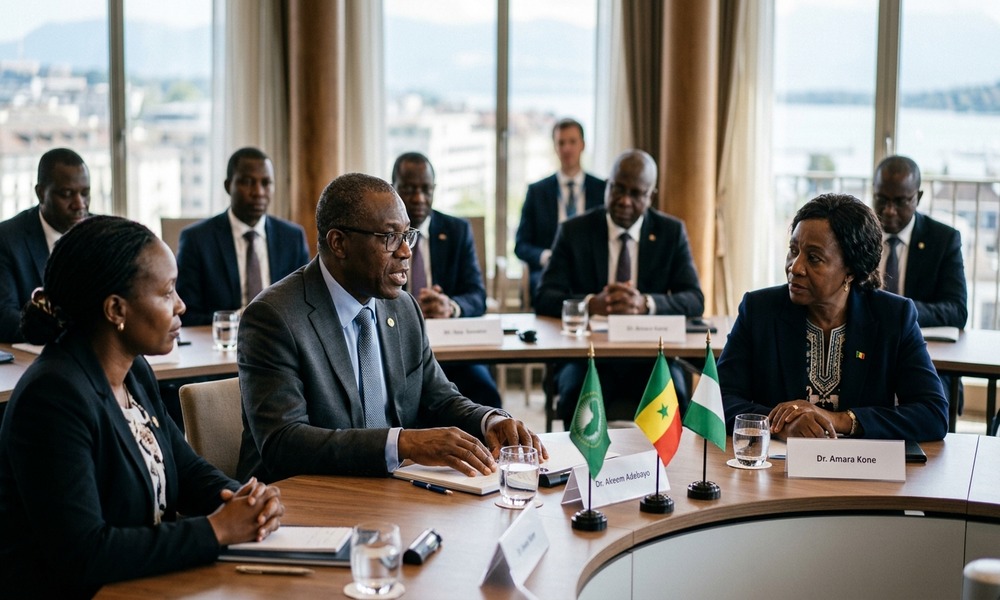
A global health commitment that cannot be felt in a village is unfinished diplomacy. That is the lesson Kenya must carry forward from the 81st session of the United Nations General Assembly.
UNGA provides a platform for countries to influence priorities, build partnerships and mobilize resources. Its value will not be determined by our engagements in New York. It will be determined by what changes for Kenyans after the meetings.
Health diplomacy can no longer revolve around declarations followed by fragmented projects. It must secure the financing, technology, knowledge and institutional capacity countries need to protect their people.
This matters because health threats no longer respect national boundaries. Disease outbreaks spread rapidly across countries. Climate change is altering disease patterns and increasing malnutrition, displacement and pressure on health facilities. Disruptions in global supply chains can leave entire regions without essential medicines. Decisions made in international financial and trade institutions directly affect the care available in local communities.
Health is therefore not merely a domestic service. It is a matter of national security, economic stability and international cooperation.
Kenya’s engagements at UNGA81 reflected this reality. The country advanced climate-resilient primary healthcare, child survival and nutrition, investment in adolescent girls, stronger community health systems and African pharmaceutical manufacturing. Together, they support a larger objective: a health system less vulnerable to unpredictable financing, supply disruptions and temporary programmes.
International health partnerships have made significant contributions to Kenya’s fight against HIV, tuberculosis, malaria and other public health threats. They have saved lives and expanded access to services. Yet Kenya cannot rely on programmes that operate separately from national systems or weaken when external funding changes.
Kenya must negotiate partnerships that leave the country stronger than they found it. Investment must strengthen institutions and systems that endure beyond individual funding cycles. Laboratories, disease surveillance networks, health facilities, digital systems and a skilled workforce are not secondary administrative concerns. They are the foundations of health security.
Community Health Promoters offer a practical example. They connect households with health information, screening, referrals and follow-up care. They support immunization, nutrition, maternal and child health, disease prevention and the early identification of threats.
International investment should strengthen this national platform instead of creating parallel community structures. Community Health Promoters must be trained, equipped, supervised and supported. Investment through them should expand Kenya’s permanent capacity to prevent illness and respond to public health emergencies.
Climate financing must also reach the health sector. Communities do not experience climate change as an abstract environmental debate. They experience it through unsafe water, food insecurity, malnutrition, disease outbreaks and interrupted health services.
Kenya was right to call at UNGA81 for predictable investment in resilient health facilities, early warning systems, climate-informed surveillance and community preparedness. Global climate commitments will remain incomplete while health facilities face emergencies without the infrastructure and resources required to protect affected populations.
Child survival and nutrition demand the same clarity of purpose. Kenya’s commitment to expand school meals to 10 million learners by 2030 is significant because it connects health, education, agriculture and social protection. International partners should align behind such national commitments instead of separating nutrition into numerous short-term interventions.
Investment in adolescent girls must similarly extend beyond isolated campaigns. Keeping girls healthy in school, preventing early pregnancy and creating economic opportunities improve the prospects of families and future generations. Supporting adolescent girls is therefore not simply a social obligation: it is a national health and development strategy.
The strongest test of health diplomacy will be Africa’s ability to manufacture the medicines and technologies its people need. A continent that remains heavily dependent on distant supply chains cannot claim genuine health security.
Kenya must use its diplomatic influence to secure technology transfer, scientific expertise, long-term investment and access to markets for African manufacturers. Partnerships that only move packaging or the final stages of production to Africa will not create the capability the continent requires.
Kenya also carries responsibilities. International commitments must be linked to national plans, budgets and accountable institutions. Agreements reached abroad must have clear implementation timelines and measurable results. Citizens should know what was secured in their name and how it will improve services.
Health diplomacy must shorten the distance between international decisions and ordinary people. Its success should be visible when a child receives adequate nutrition, a Community Health Promoter reaches a vulnerable household, a facility remains open through a climate emergency and a patient finds the medicine needed for treatment.
UNGA81 gave Kenya a platform. The responsibility now is to convert diplomatic influence into lasting health security.
Written by Principal Secretary, State Department for Public Health and Professional Standards Mary Muthoni